How to Get Your First Credit Card in Bangladesh
No credit history, no problem. Here is exactly who can get a credit card in Bangladesh, the documents you need, the easiest routes for first-timers (salary account, FDR-backed card, student card), the new 2026 rules, and the mistakes that cost beginners money.

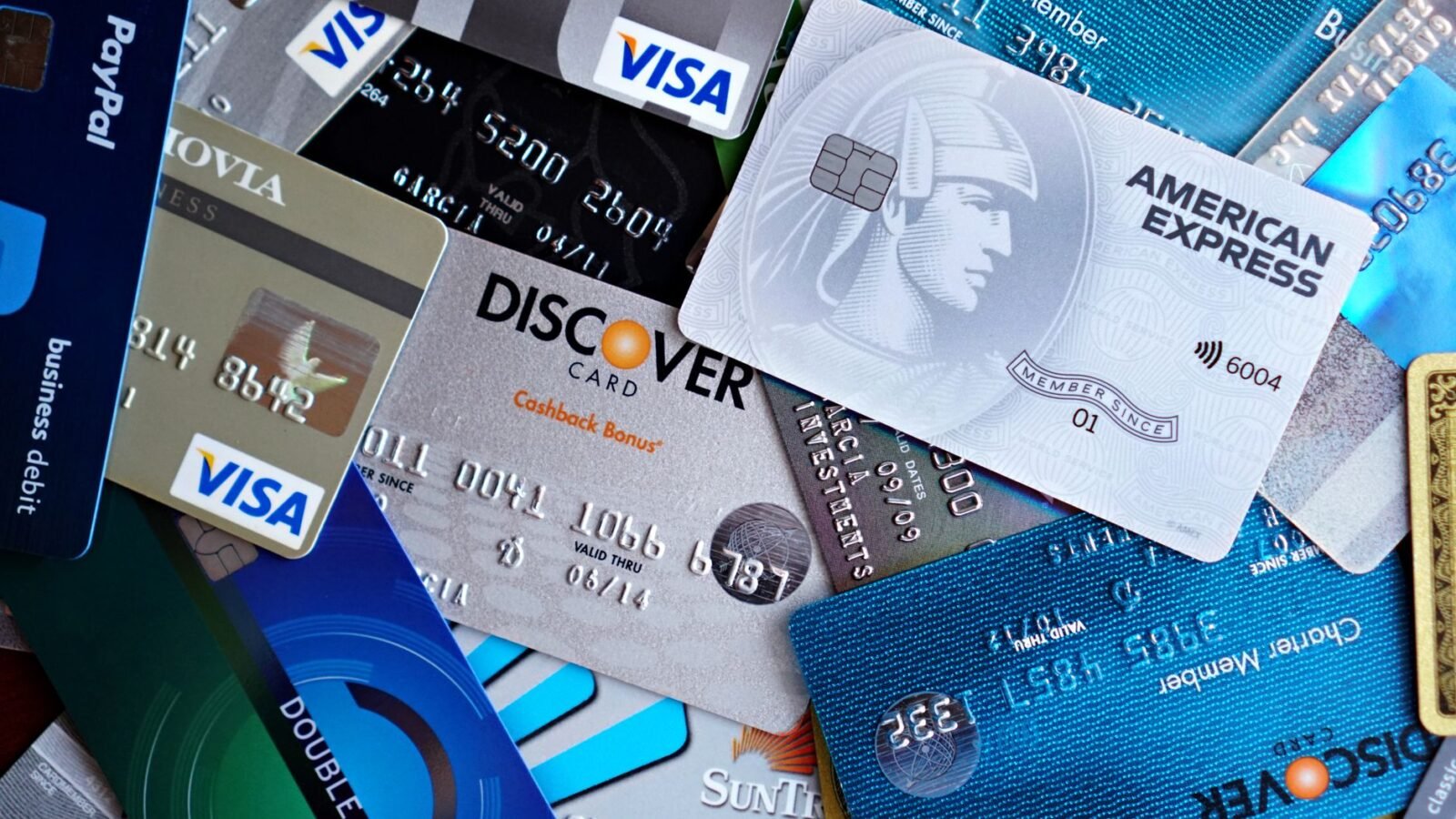
Getting your first credit card in Bangladesh can feel like a closed door: banks want proof that you can repay, but you have never had credit before. The good news is that there are three or four well-worn routes in, and the rules changed in 2026 in borrowers’ favour. Here is who can apply, which documents you need, the easiest way in for your situation, what a card really costs, and how to use it without falling into debt.
A first salary, and a first rejection
Tanha, 24, started her first job at a Dhaka software company last year. She wanted a credit card to book flights, pay for online courses in dollars and build a credit record. Her first application, made at a bank where she had no account, came back rejected: too little history, and her salary was paid in another bank.
Six months later she tried again, this time at the bank that paid her salary. She brought her e-TIN, salary certificate and six months of statements. The card arrived in two weeks, with a modest limit of Tk 50,000. “The second time, I applied where the bank could already see my money coming in,” she says. That is the single most useful lesson for a first-time applicant.
Who can get a credit card?
Under Bangladesh Bank’s credit card policy, issued in March 2026 to replace the 2004 guidelines, the basic requirements are:
- Age: at least 18 for a primary card. Dependents aged 16 or over can get a supplementary card on a parent’s account.
- e-TIN: a tax identification number certificate.
- Clean CIB report: no defaulted loans on your record at Bangladesh Bank’s Credit Information Bureau.
- A way to repay: a regular income from salary, business or profession, or security such as a fixed deposit.
Each bank then sets its own minimum income and other conditions, The Daily Ittefaq reported.
Do you need to show your tax return?
This rule has changed more than once. In 2025, the government said a TIN alone was enough to get a credit card, The Daily Star reported. A later Daily Star explainer in December 2025 listed credit card applications and renewals among cases where a system-generated tax certificate is needed. Before you apply, ask your bank exactly what it requires, and if you file returns, bring your latest return acknowledgment just in case.
The four routes in for first-timers
1. Apply at your salary bank (easiest for employees)
If your employer pays your salary into a bank account, start there. The bank can already see your income, often has pre-approved offers for its payroll customers, and usually needs fewer documents. Ask HR whether your company has a card agreement with its payroll bank; many do.
2. A secured card against a fixed deposit (easiest for almost anyone)
If you have savings but no regular salary, such as a freelancer, a new business owner or a homemaker, you can get a card backed by a fixed deposit (FDR) or DPS at the same bank. The bank puts a lien on the deposit and gives you a card limit linked to it. Your deposit keeps earning interest, and the approval is much easier because the bank is fully covered. Under the 2026 rules, secured cards can go up to Tk 40 lakh. Extra paperwork usually includes the FDR receipt, a lien letter and fund-holding instructions.
Freelancers who earn in dollars can also use a secured card to pay for international subscriptions. If you are still setting up how to receive foreign payments, see our guide to international payment platforms.
3. A supplementary card on a parent’s account (for students)
Students aged 16 and over can get a supplementary card linked to a parent’s credit card. The parent sets the limit and pays the bill. Some banks have also launched student credit cards for university students, backed by a parent’s guarantee; Southeast Bank, for example, launched a Visa student credit card for undergraduate and postgraduate students, The Daily Star reported.
4. A standard unsecured card (with income proof)
Salaried people, business owners and professionals can apply for an ordinary card at any bank with proof of income. Entry-level cards (often called Classic, Gold or Titanium) have the lowest income requirements and annual fees. Many banks look for a monthly income of roughly Tk 20,000 to Tk 30,000 for a basic card, but this varies widely, so check the bank’s eligibility page.
Documents checklist
| Everyone | Salaried | Business owners | Professionals | Secured card |
|---|---|---|---|---|
| Application form; NID or passport; e-TIN certificate; passport-size photos; signed CIB form | Salary certificate or letter of introduction; pay slips; bank statement (usually 6 months); office ID or visiting card | Trade licence; 6 to 12 months of bank statements; partnership deed or company papers if relevant | Professional certificate (e.g. BMDC, Bar Council); bank statement; visiting card | FDR or DPS receipt; lien letter; fund-holding instructions |
Banks may ask for more, such as a utility bill as proof of address or details of any other loans.
Step by step: how to apply
- Get your e-TIN online from the NBR website if you do not have one. It is free and takes minutes.
- Choose the right route: your salary bank, a secured card, or a supplementary card.
- Pick an entry-level card with a low annual fee, ideally one with a fee waiver if you spend a set amount.
- Collect your documents and make sure your name, address and NID details match across them.
- Apply online, through the bank’s app or at a branch. Avoid applying to many banks at once; each application triggers a CIB check.
- Wait for verification. Banks may call your office or visit your address. Approval usually takes one to three weeks.
- Activate the card and set up auto-debit for the full bill amount from day one.
What a credit card really costs
| Cost | What to expect |
|---|---|
| Annual fee | From about Tk 1,000 for basic cards to Tk 10,000 or more for premium cards; often waivable by spending or reward points |
| Interest | Up to 25% a year, the Bangladesh Bank cap, charged only on the unpaid balance |
| Interest-free period | Usually up to about 45 to 50 days on purchases if you pay the full bill; never on cash withdrawals |
| Late payment fee | Often Tk 500 to Tk 1,000, which can be charged only once per billing cycle under the new rules |
| Cash advance fee | Often 2% to 3% of the amount, plus interest from day one |
| Small extras | SMS alert fees, card replacement, renewal |
For real examples, see our reviews of the BRAC Bank Visa Cashback card (Tk 2,000 a year), the Dhaka Bank Visa Signature card and the UCB Visa Signature card.
The minimum payment trap
Your statement shows a small “minimum payment”. Paying only that keeps you out of default, but interest runs on everything else. Take a Tk 30,000 balance at 25% interest. If you pay only 5% a month (at least Tk 500) and spend nothing more, it takes about five years to clear and costs about Tk 16,900 in interest (our calculation). Even one month of carrying Tk 20,000 costs about Tk 417 in interest.
Your rights under the 2026 rules
- No charges before you activate the card.
- At least 30 days’ notice before changes to interest rates or charges.
- Late fees only once per billing cycle.
- No harassment or threats in debt collection, calls only during office hours, and no contact with your family or referees about your debt.
- A 24-hour helpline to block a lost or stolen card.
The same policy raised the maximum card limit to Tk 40 lakh (Tk 20 lakh without security), and capped cash withdrawals at half the limit, The Daily Star reported. First cards almost always start far lower, often Tk 30,000 to Tk 1 lakh.
Seven rules for using your first card well
- Pay the full statement balance every month. Set up auto-debit.
- Keep spending well below your limit, ideally under a third.
- Never withdraw cash with a credit card unless it is an emergency.
- Use 0% EMI only for planned purchases, and read the processing fee.
- Turn on transaction alerts and check every statement.
- Never share your card number, CVV or OTP, even with someone claiming to be from your bank.
- Use the card regularly but lightly for six to twelve months; a clean record makes a higher limit and a better card easier to get.
Back to Tanha
A year on, Tanha pays her bill in full by auto-debit and uses the card mainly for online courses and travel bookings. Her bank raised her limit after twelve clean months. “I treat it like a debit card that gives me 45 days,” she says. “The day I can’t pay the full bill is the day I stop using it.”
This article is for general information only and is not financial advice. Requirements and charges vary by bank and change over time. Check the current terms with your bank before applying.
Frequently asked questions
What is the minimum age for a credit card in Bangladesh?
18 for a primary card. Dependents aged 16 or over can get a supplementary card on a parent’s account.
Can I get a credit card without a salary?
Yes. A secured card backed by a fixed deposit or DPS is the easiest route for freelancers, students with savings and others without a regular salary. Business owners and professionals can also apply with proof of income.
Is a TIN required?
Yes, an e-TIN certificate is required. Ask your bank whether it also needs proof of tax return filing, as these rules have changed recently.
What is the maximum credit card interest rate?
25% a year under Bangladesh Bank’s 2026 rules, charged only on the unpaid balance.
How long does approval take?
Usually one to three weeks, including document checks, a CIB check and sometimes an office or address verification.
Why was my application rejected?
Common reasons are income below the bank’s threshold, a negative CIB record, mismatched documents, failed verification, or applying at a bank with no relationship. Try your salary bank or a secured card next.
Key words explained
| Term | What it means |
|---|---|
| e-TIN | Electronic tax identification number from the National Board of Revenue. |
| CIB | Credit Information Bureau: Bangladesh Bank’s record of your loans and repayment history. |
| Secured card | A credit card backed by your own fixed deposit or savings. |
| Supplementary card | An extra card on someone else’s account, which they pay for. |
| Interest-free period | The days between a purchase and the due date when no interest is charged if you pay in full. |
| Minimum payment | The smallest amount you must pay each month to avoid a late fee; interest still runs on the rest. |
| Lien | A bank’s hold on your deposit as security. |
How we reported this
We used Bangladesh Bank’s March 2026 credit card policy as reported by The Daily Ittefaq and The Daily Star, The Daily Star’s 2025 reporting on tax return requirements, a Daily Star guide to first-time applicants and the Southeast Bank student card launch, and our own credit card reviews. Income thresholds and fees vary by bank and are given as typical ranges. The minimum payment example is our own calculation.
Editor’s note: Tanha is illustrative, created to show how a first-time applicant might get a card. She is not a real person. The rules and figures come from the published sources listed with this article.
Sources
- Credit card loan limit raised to Tk 40 lakh (The Daily Ittefaq, March 2026) · en.ittefaq.com.bd
- BB raises credit card loan limit to Tk 40 lakh (The Daily Star, March 2026) · online-d11.thedailystar.net
- Where will you still need to submit proof of tax return filing? (The Daily Star, June 2025) · thedailystar.net
- Proof of return submission: when and why it's necessary (The Daily Star, December 2025) · thedailystar.net
- Things to know before getting a credit card (The Daily Star) · thedailystar.net
- Southeast Bank launches Visa student credit card (The Daily Star) · online91.thedailystar.net