Why Bangladesh Needs More Financial Startups
Half of Bangladeshi adults still have no account, only 14% can get formal credit, and startup funding has collapsed by 95%. Why the country needs more fintech startups, what is holding them back, and what could change.

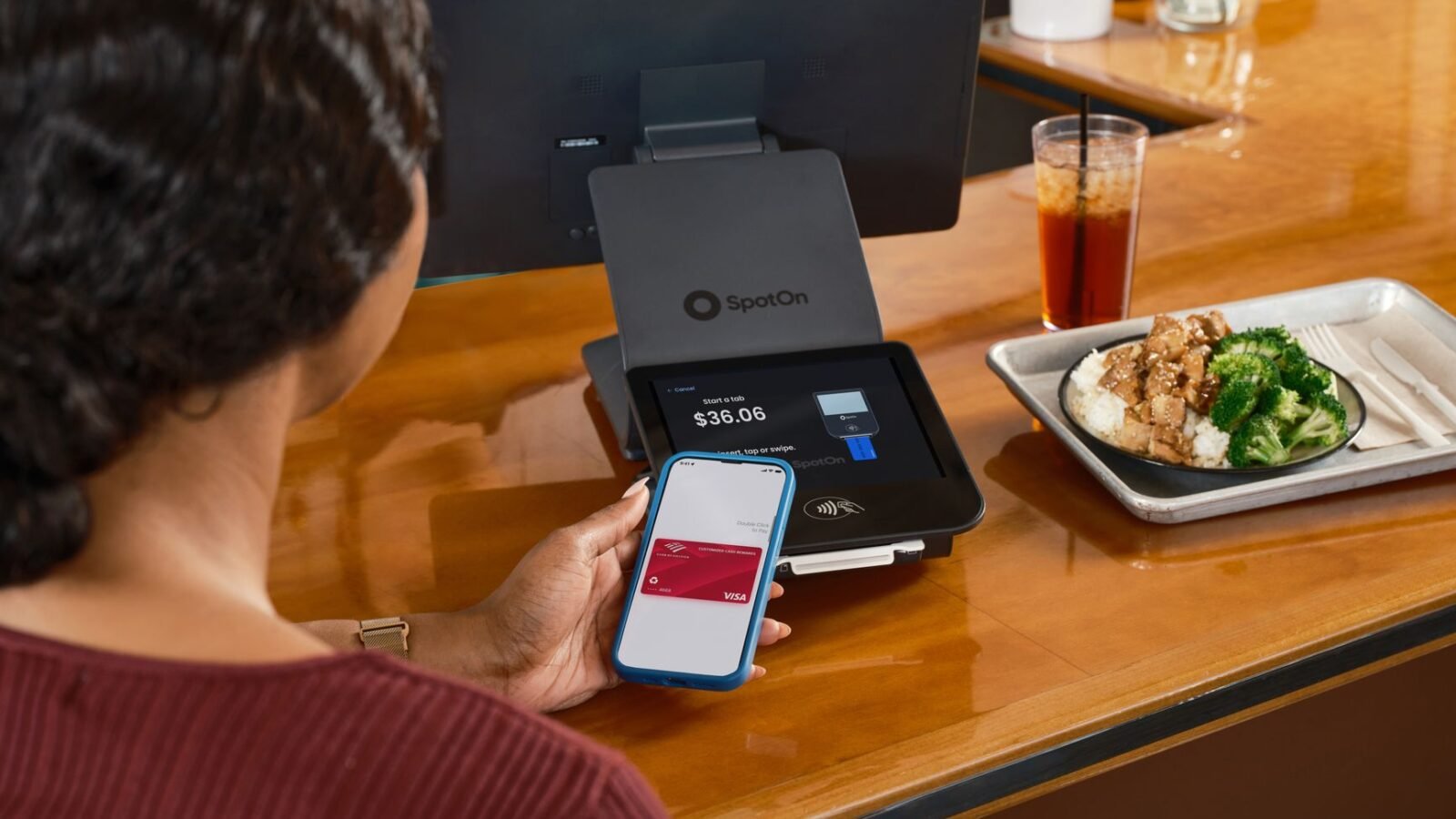
Bangladesh has one of the world’s great mobile money success stories: more MFS accounts than people, and bKash, the country’s only unicorn. Yet about half of adults still have no account, only one in seven can get formal credit, and most mobile money is still used just to send cash and take it out again. Meanwhile, money for new startups has almost dried up. Here is why the country needs many more financial technology (fintech) startups, what is stopping them, and what could change.
A shop that runs on cash and credit from neighbours
Rina runs a small grocery shop in Gazipur. She takes bKash payments every day, but when she needs Tk 1 lakh to stock up before Eid, no bank will lend to her. She has no trade licence, no collateral and no formal accounts. So she borrows from a local lender at a rate she would rather not think about, or skips the extra stock and loses sales.
Her mobile wallet already holds years of evidence of her business: daily payments in, suppliers paid out. In many countries, a fintech company would use that record to offer her a small loan in minutes. In Bangladesh, that kind of service is only just starting.
The gap in numbers
| Indicator | Figure | Source |
|---|---|---|
| Adults with an account (bank or mobile) | About 50% | World Bank Global Findex 2025, via The Financial Express |
| Adults with a bank account | About 26% | World Bank, via The Business Standard (2025) |
| Adults with access to formal credit | About 14% | World Bank, via The Business Standard (2025) |
| Small and medium businesses served by formal institutions | About 28% | World Bank, via The Business Standard (2025) |
| MFS use that is just cash-in and cash-out | 86% in 2024 | World Bank, via The Business Standard (2025) |
| Credit card holders | About 2.6 million | UNB (2025) |
Bangladesh is one of eight countries that together hold more than half of the world’s unbanked adults, The Financial Express reported from the World Bank’s 2025 Findex. Women are much less likely than men to have a mobile account.
What fintech has already done
The case for more fintech starts with how much the first wave achieved. Mobile financial services handled about Tk 17.37 lakh crore (about $158 billion) in 2024, up 28% in a year, through more than 239 million active accounts and about 1.8 million agents, UNB reported. bKash became Bangladesh’s only unicorn, and its 2021 deal with SoftBank, at $250 million, remains the biggest startup deal in the country’s history.
The next step is already visible. City Bank and bKash’s digital nano loans, from Tk 500 to Tk 50,000 with no collateral, had reached 9.5 lakh borrowers and Tk 2,300 crore by April 2025, with an average loan of about Tk 4,000 and defaults below 1%, The Business Standard reported. City Bank was disbursing 25,000 to 30,000 such loans a day, more than all traditional banks combined through ordinary channels. That is what fintech can do for people like Rina.
Other parts of the payment system have also moved forward: instant bank-to-wallet transfers through NPSB, Bangla QR at shops, and a growing set of online payment gateways.
Five reasons the country needs more
1. Credit for people banks cannot reach
With only about 14% of adults able to get formal credit and most small businesses outside the formal system, millions borrow informally at high cost. Fintech lenders can use mobile payment records, utility bills and sales data to judge creditworthiness, making small, fast loans possible without collateral. Our report on what it takes to get an SME loan shows how hard the traditional route is.
2. Savings, insurance and investment for ordinary people
Most mobile money still moves cash from one place to another. Fintechs can turn wallets into tools for saving small amounts, buying low-cost insurance and investing in savings products, services that today mainly reach people who visit bank branches.
3. Lower costs through competition
A market dominated by a few large players has little pressure to cut fees. More competitors in payments, remittances and lending can push down costs for sending money, cashing out and borrowing.
4. Tools for small businesses and freelancers
Shops, f-commerce sellers and freelancers need simple invoicing, payroll, accounting, cross-border payments and working capital. Fintechs can bundle these into one app, which helps businesses formalise and, in turn, qualify for more credit.
5. Jobs and investment
Successful fintechs create skilled jobs, attract foreign capital and build know-how that spreads to the rest of the economy. bKash showed that a Bangladeshi fintech can reach global scale; the country needs more than one.
What is holding them back
The money has dried up
Startup funding in Bangladesh fell about 95% to roughly $6 million in the first half of 2026, from $120 million a year earlier, the lowest first-half figure in five years, according to LightCastle Partners. Financial services drew only about $1.7 million. Startup investment is about 0.03% of GDP, against about 0.3% in India, The Daily Star reported. Local investors have supplied only about 7% of the roughly $1.2 billion raised over the past decade.
Foreign investors have pulled back for several reasons: the taka fell from about Tk 84 to about Tk 122 per dollar, cutting their returns; it is hard to exit an investment through a stock listing; and global venture money has flowed mainly into artificial intelligence.
Rules built for banks, not startups
Fintechs that want to lend must usually partner with a bank, because there is no clear framework for fintech lending, the World Bank has noted. bKash initially rolled out nano loans only on a limited scale for this reason. Investors describe the regulatory environment as conservative and uneven.
Digital banks still waiting
Bangladesh still has no working digital bank, meaning a bank with no branches that runs fully through an app. The licence given to Nagad’s digital bank in 2024 was later suspended, and Kori Digital Bank did not meet the conditions for a full licence in time. In the second round, 12 firms applied. On 24 September 2026, Bangladesh Bank gave initial approval (letters of intent) to five: bKash Digital Bank, Boost Digital Bank (promoted by Robi’s parent Axiata), Nova Digital Bank (backed by Banglalink’s parent VEON and Square Group), DK Digital Bank and a fresh approval for Kori Digital Bank, The Business Standard reported. Each must still build its systems and pass checks before it gets a full licence, so customers will have to wait a while longer.
Bank apps many people cannot use
Bangladesh has around 60 banks, and almost every one has its own app. Many are slow, look outdated and fail when people need them most. Security steps such as repeated OTPs, device binding and passwords that expire are important, but they are often poorly explained, so many first-time users give up and go back to the branch or to cash.
A Bangladesh Institute of Bank Management (BIBM) study of 32 banks found that about 75% of bank customers still use no digital banking service at all. It named a knowledge and literacy gap as the single biggest barrier, and found that nearly half of customers (48%) were dissatisfied or neutral about digital services, mainly because the systems were unreliable, The Financial Express reported. This is a gap fintech startups can fill: simple apps, clear Bangla instructions, and security that protects people without confusing them.
Charges every time money moves
Newer wallets such as Pathao Pay and iPay have made payments easier, but many charge when money comes in or goes out. Adding money from a card, withdrawing to a bank and paying a shop through a payment gateway can each carry a fee.
| Service | Published charge |
|---|---|
| iPay: add money by Visa or Mastercard | 2.5% |
| iPay: add money by AMEX | 3.5% |
| iPay: add money from a bank | Free |
| Pathao Pay: withdraw to a bank (NPSB, BEFTN) or MFS | 1.5% |
| Pathao Pay Card: annual fee | Tk 350 |
| Pathao Pay Card: SMS alerts | Tk 200 a year |
Source: the published fee pages of iPay and Pathao Pay, checked in November 2026. VAT may apply, and fees can change.
By our calculation, a freelancer who moves Tk 50,000 a month from Pathao Pay to a bank pays Tk 750 a month at 1.5%, or Tk 9,000 a year, before VAT. Online shops also pay a payment gateway charge on each sale, which many pass on to customers (see our guide to payment gateways in Bangladesh). More competition is one of the few things that reliably pushes these charges down.
Trust and fraud
Past e-commerce scandals and mobile money fraud have made both customers and regulators cautious. Any expansion of fintech needs strong customer protection, data security and fair debt collection, or it will repeat old mistakes.
What is changing
There are signs of a response, The Daily Star reported in August 2026:
- Bangladesh Startup Investment Company (BSIC): backed by 39 commercial banks under Bangladesh Bank’s guidance, with about Tk 425 crore in initial capital, investing at seed to Series A stage. Banks can add up to 1% of their annual profits.
- Fund of funds: Startup Bangladesh’s Tk 400 crore fund to back professional venture capital funds, plus a Tk 300 crore co-investment fund.
- Budget support: Tk 500 crore for startups in the current budget, and tax and VAT exemptions for eligible startups until 2035, according to LightCastle.
- New payment players: Banglalink received a Payment Service Provider licence from Bangladesh Bank in August 2026 for Mukto Pay, which covers money transfers, merchant and e-commerce payments, bill payments and salary disbursements, VEON said. It joins non-bank wallets such as Pathao Pay, iPay and Pocket.
Experts welcome the steps but warn that paperwork is heavy and the pool of local investors is small. “Funding is the biggest challenge for startups,” a former BASIS president said.
What would help most
- A clear licence for fintech lending, so startups do not depend entirely on bank partners.
- A working regulatory sandbox where new products can be tested under supervision.
- Shared digital infrastructure: easy electronic KYC with the NID database, open banking connections and better credit data.
- A decision on digital banks, so the licences already applied for can either launch or be rejected.
- More local capital and easier exits, including a workable path to listing on the local stock market.
- Strong consumer protection, so growth does not come at the cost of fraud or reckless lending.
What it means for you
- Use only licensed services. Check that a fintech app is licensed by Bangladesh Bank or works with a licensed bank before you put money in.
- Borrow small and repay on time. Digital nano loans can build a credit record that leads to bigger loans later.
- Guard your PIN and OTP. No genuine provider will ever ask for them.
- If you are building a fintech, look at the new BSIC and fund-of-funds programmes, and plan for a bank partnership while lending rules are still evolving.
Back to Rina
This year Rina noticed a loan offer inside her wallet app: Tk 10,000, repayable over three months. She took it, repaid on time, and was offered a larger amount the next time. It is not yet the Tk 1 lakh she needs before Eid, but it is the first time a formal lender has looked at her business at all. “For years my money moved through the phone,” she says. “Now, slowly, the phone is starting to trust me back.”
Frequently asked questions
What is a fintech startup?
A young company that uses technology to provide financial services, such as payments, lending, savings, insurance or investing, usually through an app.
How many people in Bangladesh are unbanked?
About half of adults do not have a bank or mobile money account, according to the World Bank’s 2025 Global Findex. Only about a quarter have a bank account.
Why has startup funding fallen?
Foreign investors pulled back because of the weaker taka, difficult exits, economic and political uncertainty, and a global shift of venture money towards artificial intelligence. Local investment has always been small.
Are there digital banks in Bangladesh?
Not yet operating. In September 2026, Bangladesh Bank gave initial approval to five digital banks, including bKash Digital Bank and Robi-backed Boost Digital Bank, but each must meet more conditions before getting a full licence and launching.
What support is there for fintech startups?
The bank-backed Bangladesh Startup Investment Company, Startup Bangladesh’s fund of funds and co-investment fund, a Tk 500 crore budget allocation, and tax and VAT exemptions for eligible startups.
Why do so many people in Bangladesh avoid banking apps?
Low digital and financial literacy, slow or unreliable apps, and security steps that are hard to understand. A BIBM study found about 75% of bank customers use no digital banking service.
Key words explained
| Term | What it means |
|---|---|
| Fintech | Financial technology: using software and apps to deliver financial services. |
| MFS | Mobile financial services such as bKash, Nagad and Rocket. |
| Unbanked | Adults with no account at a bank or mobile money provider. |
| Nano loan | A very small, short-term digital loan, usually without collateral. |
| Digital bank | A bank with no branches that serves customers only through apps and online. |
| Regulatory sandbox | A supervised space where new financial products can be tested before full approval. |
| eKYC | Electronic “know your customer”: verifying identity online, for example with the NID. |
| Unicorn | A private startup valued at $1 billion or more. |
| Payment Service Provider (PSP) | A firm licensed by Bangladesh Bank to run payment services such as wallets, without taking deposits like a bank. |
| Letter of intent (LoI) | An initial approval; the firm must meet more conditions before getting a full licence. |
How we reported this
We used LightCastle Partners’ July 2026 startup investment report; reporting by The Daily Star (April and August 2026) on the funding slump and new government and bank initiatives; The Business Standard (June 2025) on digital nano loans and World Bank inclusion data; The Financial Express (July 2025) on the World Bank’s 2025 Global Findex; UNB (September 2025) on MFS figures; and bdnews24.com (September 2026) on digital bank licensing. Figures are from these sources and may be updated by later data. We also used a BIBM study reported by The Financial Express, the published fee pages of iPay and Pathao Pay, VEON’s announcement on Mukto Pay, and The Business Standard’s report on the September 2026 digital bank approvals.
Editor’s note: Rina is illustrative, created to show how fintech can affect a small business owner. She is not a real person. All figures come from the published sources listed with this article.
Sources
- Bangladesh Startup Investments: H1 report (LightCastle Partners, July 2026) · lightcastlepartners.com
- Govt, banks step in as startup funding dries up (The Daily Star, August 2026) · thedailystar.net
- The boom is over: How Bangladesh's startups hit a wall (The Daily Star, April 2026) · thedailystar.net
- How mobile wallets are driving the rise of digital nano loans (The Business Standard, June 2025) · tbsnews.net
- BD among top eight countries with largest unbanked population (The Financial Express, July 2025) · thefinancialexpress.com.bd
- Bangladesh on the cusp of a fintech boom, if challenges addressed (UNB, September 2025) · unb.com.bd
- Digital bank licensing status (bdnews24.com, September 2026) · bdnews24.com
- The Financial Express: 75pc of banking customers still excluded from digital services · today.thefinancialexpress.com.bd
- iPay: Fees and pricing · ipay.com.bd
- Pathao Pay: Fees and charges · pathaopay.com
- VEON: Banglalink receives Bangladesh Bank approval to launch Mukto Pay · veon.com
- The Business Standard: 5 digital banks, including bKash and Robi-backed ventures, get BB approval · tbsnews.net