How to Become a Kotipoti in Bangladesh: One Family’s Plan, Seven Bank Schemes and the Real Maths
Seven banks promise to make you a crorepati through a monthly deposit scheme. We follow one Dhaka couple through the choice, compare the instalments bank by bank, and work out what Tk 1 crore will really be worth after tax and inflation.

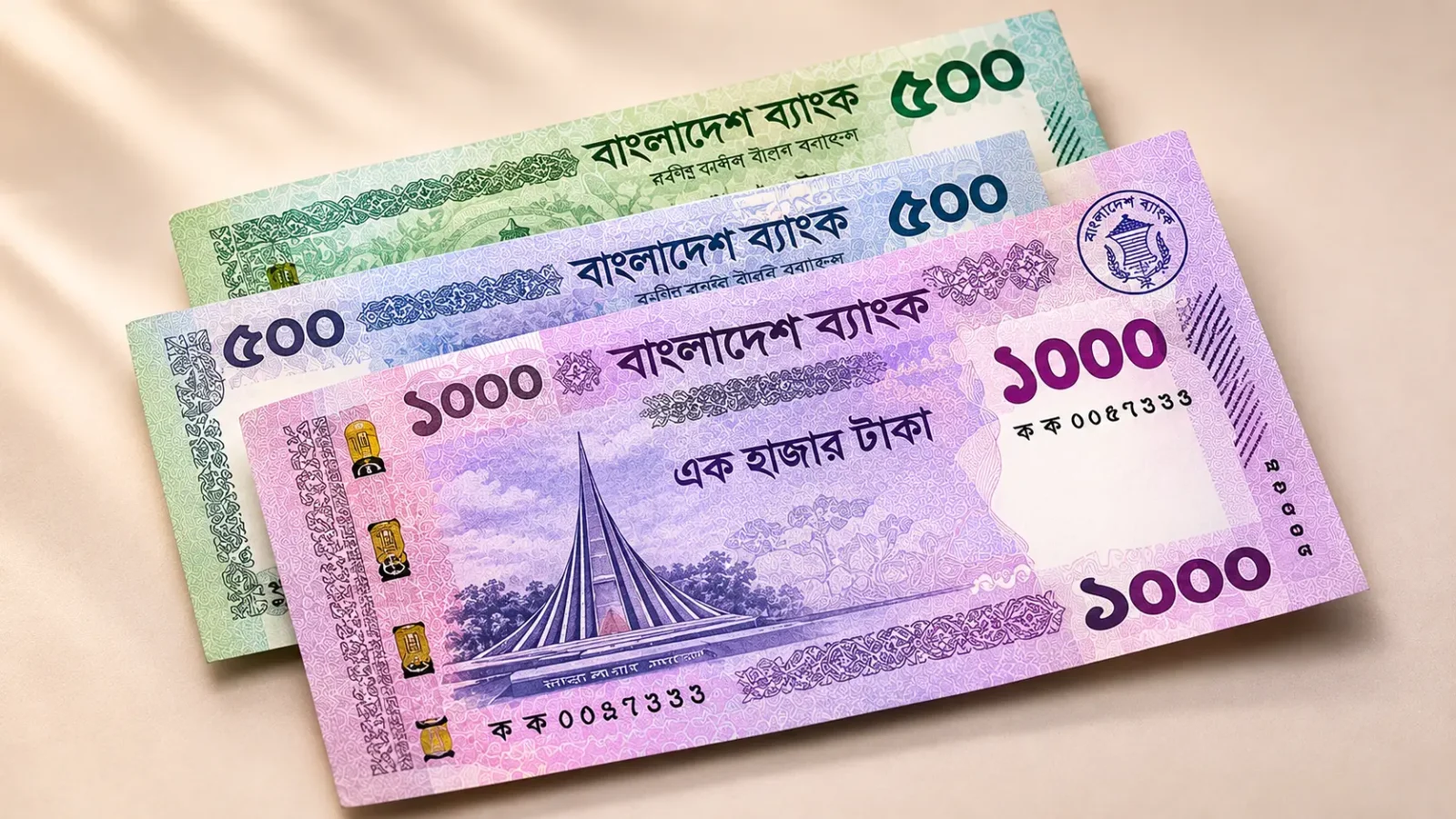
Banks across Bangladesh now sell the same dream: put away a fixed amount every month, and one day you will be a kotipoti, a crorepati, with Tk 1 crore in your account. Mitu and Rashed decided to find out what that dream really costs. Here is their story, the numbers from seven banks, and the part of the maths the brochures leave out.
Editor’s note: Mitu and Rashed are an illustrative couple, created to show how a typical Dhaka household might approach this decision. They are not real people, and no quotes in this story come from real individuals. All bank figures are taken from the banks’ own published pages, checked on 1 November 2026, and all calculations are ours.
The poster at the bank
It started with a poster. Mitu, 34, a mid-level officer at a pharmaceutical company, was waiting at her bank branch in Mirpur to update her NID details when she saw it: a smiling family, a big “1 crore” in gold, and a line saying the dream could start from a monthly instalment.
That evening she showed a photo of the poster to Rashed, 37, who works in sales for an electronics distributor. Between them, the couple bring home about Tk 1,90,000 a month. They have a seven-year-old daughter, a rented flat, and the usual worries: school fees that rise every year, parents who will need care, and the question every salaried couple in Dhaka asks at some point. Will we ever have real savings?
“One crore,” Rashed said, half-joking. “My father never saw one lakh in his account at once.”
Mitu was more practical. “Let’s see what it actually costs. Every bank has one of these now.”
She was right. That weekend, they went through seven of them.
What a Kotipoti scheme actually is
Strip away the marketing, and a Kotipoti scheme is a DPS (deposit pension scheme) with a target. You choose how many years you want to save. The bank works backwards and tells you the fixed monthly amount that, with interest, should grow to Tk 1 crore by the end. The money is taken automatically from your linked savings or current account each month.
Nothing magical happens to your money. It earns ordinary deposit interest. What makes these schemes work is discipline: you commit a large sum every month for a long time and cannot easily touch it. Most of the crore comes from your own pocket, and a big part comes from interest compounding over years.
Seven banks, seven price tags
Mitu made a spreadsheet. Here is what the banks’ own pages showed as the monthly instalment needed to reach Tk 1 crore, with no initial lump sum.
| Bank and scheme | Rate shown | 5 years | 10 years | 15 years | Longest tenure |
|---|---|---|---|---|---|
| ONE Bank Kotipoti Deposit Scheme | 10% to 11% | Tk 1,29,804 | Tk 48,037 | Tk 22,494 | 15 years |
| Dhaka Bank Kotipoti Deposit Plan | 8.5% to 10% (indicative) | Tk 1,29,484 | Tk 53,701 | Tk 28,218 | 15 years |
| Prime Kotipoti DPS | 9% | Tk 1,32,782 | Tk 52,311 | Tk 27,061 | 15 years |
| EBL Kotipoti Scheme | Not shown | Tk 1,35,100 to 1,37,100 | Tk 55,500 to 56,700 | Tk 29,800 to 30,700 | 20 years (Tk 17,800 to 18,600) |
| Rupali Bank (RKDS – Polash) | 8.5% | Not offered | Tk 54,000 | Tk 28,500 | 15 years |
| AB Bank Kotipoti Deposit Scheme | Not shown on page | Instalments not listed on the scheme page | 20 years | ||
| NCC Bank Kotipoti Savings Scheme | Not shown on page | Instalments not listed on the scheme page | 20 years | ||
Figures rounded to the nearest taka. EBL shows two instalment figures for each tenure without labelling them; its page mentions “reduced monthly installments”, so the lower figure may apply in some cases. Dhaka Bank’s table is marked indicative and dated March 2024. Rupali’s page does not state the maturity amount for its listed instalments. Check each bank’s current sheet before you sign.
The first thing that struck Rashed was how much the price changes with time. A five-year crore costs about Tk 1.3 lakh a month at any bank. That is more than their entire take-home pay after rent. Stretch it to 15 years, and the monthly amount falls to between Tk 22,000 and Tk 30,000.
The second thing was how much the banks differ. For the same 15-year crore, ONE Bank’s instalment was Tk 22,494 and Rupali’s was Tk 28,500. That gap of about Tk 6,000 a month adds up to more than Tk 10.8 lakh over 15 years (our calculation). Same goal, very different cost, almost entirely because of the interest rate.
Where the crore really comes from
“So how much of the crore is our money?” Mitu asked. She worked it out for the 15-year option at two banks.
| 15-year scheme | Monthly | You pay in over 15 years | Interest makes up |
|---|---|---|---|
| ONE Bank at 11% | Tk 22,494 | Tk 40.5 lakh | about Tk 59.5 lakh |
| Prime Bank at 9% | Tk 27,061 | Tk 48.7 lakh | about Tk 51.3 lakh |
| Rupali Bank at 8.5% | Tk 28,500 | Tk 51.3 lakh | about Tk 48.7 lakh |
Our calculation: monthly instalment × 180 months, with the rest of the Tk 1 crore attributed to interest.
Over 15 years, interest does more than half the work. Over 5 years, it does far less: a five-year crore at ONE Bank needs about Tk 77.9 lakh of your own money. Time, not the scheme, is what makes the crore affordable.
The part the poster leaves out: tax
Mitu noticed a small phrase on several pages. ONE Bank and NCC Bank say the Tk 1 crore is “before tax”. EBL says the maturity value is subject to income tax and other levies. AB Bank says tax at source and excise duty are charged at the end of each year.
In plain words: the crore on the poster is not the crore you take home. Two charges come off:
- Source tax on interest: 10% if you give the bank proof of your tax return, 15% if you do not. On about Tk 59.5 lakh of interest over 15 years, that is roughly Tk 6 lakh at 10%, or about Tk 9 lakh at 15% (our estimate).
- Excise duty: a yearly government charge on the highest balance in the account. As the balance grows from zero to a crore, the duty climbs from nothing to Tk 5,000 a year. Over 15 years, the total comes to around Tk 50,000 (our estimate, using current slabs).
So depending on how each bank applies tax, a “crore” scheme is likely to leave you with something closer to Tk 93 to 94 lakh if you have a tax return, and less if you do not. Some banks may raise the instalment to make up the difference; ask yours exactly what you will receive after tax. Our explainer on how source tax and excise duty cut deposit returns walks through the rules in detail, and our guide to filing a tax return shows how to get the lower 10% rate.
The bigger thing the poster leaves out: inflation
Rashed asked the question that changed the conversation. “What will one crore buy in 2041?”
Prices in Bangladesh rose 8.34% in the year to September 2026, according to the Bangladesh Bureau of Statistics. Nobody knows what inflation will be for the next 15 years. But here is what Tk 1 crore received in the future would be worth in today’s money under three assumptions (our calculation):
| Average inflation | Tk 1 crore in 5 years is worth today | In 10 years | In 15 years |
|---|---|---|---|
| 5% a year | Tk 78.4 lakh | Tk 61.4 lakh | Tk 48.1 lakh |
| 6% a year | Tk 74.7 lakh | Tk 55.8 lakh | Tk 41.7 lakh |
| 8.34% a year (today’s rate) | Tk 67.0 lakh | Tk 44.9 lakh | Tk 30.1 lakh |
If prices keep rising at today’s pace, the crore that arrives in 2041 would buy roughly what Tk 30 lakh buys now. That is still a lot of money, and far more than the couple would have without a plan. But it is not the life-changing sum the poster suggests.
“So we’re not really becoming kotipoti,” Rashed said.
“We’re becoming people with Tk 30 to 40 lakh in today’s money,” Mitu said. “Which is a lot more than we have now.”
Can they afford it?
A common rule of thumb is to save around 20% of take-home pay. For Mitu and Rashed, that is about Tk 38,000 a month. The 10-year schemes, at Tk 48,000 to Tk 57,000, were clearly beyond them. The 15-year options, at Tk 22,000 to Tk 30,000, fit, but would leave little room for anything else, including an emergency fund and their daughter’s education savings.
This is the trap many families fall into. A scheme sized for a good year becomes painful in a bad year. AB Bank’s page, for example, says missing three consecutive instalments ends the scheme, and overdue instalments attract a penalty. Prime Bank warns that late or missed payments change the maturity amount. Breaking a scheme early usually means a lower interest rate, or none at all in the first year.
| If you close early | EBL | Prime Bank | AB Bank |
|---|---|---|---|
| Before 1 year | No interest | No interest | Savings rate after 6 months; nothing before |
| After 1 year | Savings rate until 3 years; then 2% below scheme rate | 2% below the booked rate | 9% to 11%, depending on years completed |
As stated on each bank’s scheme page. ONE Bank, Dhaka Bank, Rupali Bank and NCC Bank do not set out their early encashment rules on the pages we checked.
The fine print that matters
Beyond the instalment, the couple listed what else differed:
- Loans against the scheme: most banks let you borrow against your balance in an emergency instead of breaking the scheme: up to 90% at EBL, ONE Bank, Prime Bank and NCC Bank; 80% at Dhaka Bank; 85% as an overdraft at AB Bank, which also offers a secured credit card. Rupali offers an overdraft against the deposit.
- Lump sum to lower the instalment: ONE Bank, Prime Bank, EBL and AB Bank let you put in an initial deposit to cut the monthly amount. At ONE Bank, Tk 5 lakh upfront cuts the 15-year instalment from Tk 22,494 to Tk 16,889. At Prime Bank, the same Tk 5 lakh cuts its 15-year instalment from Tk 27,061 to Tk 22,138.
- Who can open one: most banks require you to be 18 or older. Prime Bank and NCC Bank allow accounts for minors through a parent or guardian, and Rupali allows joint accounts with an adult. AB Bank and NCC Bank also allow companies and institutions.
- Extras: Dhaka Bank offers a free Visa credit card with its plan. Rupali sends a free SMS after each payment and lets you pay on any date of the month.
- More than one scheme: EBL, ONE Bank, Prime Bank, NCC Bank and Dhaka Bank all allow one person to open more than one.
- Bank safety: a 15-year commitment is also a 15-year bet on the bank. Deposits are protected by the government scheme only up to a limit per depositor per bank. Check a bank’s financial health, not just its rate.
What Mitu and Rashed decided
They did not sign up for a crore. Not yet.
First, they set aside an emergency fund of four months’ expenses in an ordinary savings account and a short FDR. Then they opened a smaller DPS for their daughter’s university, using the approach in our guide to saving for a child’s university with a DPS. Finally, they chose a 15-year Kotipoti scheme with the lowest instalment they could find, at a bank whose finances they trusted, and set it up to come out of their account two days after payday, so the money left before they could spend it.
Mitu also took one more step: she filed her tax return and gave the bank the proof, so the source tax on the scheme’s interest would be 10%, not 15%.
“If our income goes up,” Rashed said, “we’ll open a second one. If it goes down, we’ll take a loan against it rather than break it.”
It is a less exciting ending than the poster promised. It is also a much more realistic one.
So, how do you become a kotipoti in Bangladesh?
- Pick the longest tenure you can live with. Time cuts the monthly cost more than anything else.
- Compare the instalment, not the poster. For the same crore, banks differ by thousands of taka a month.
- Ask what you get after tax. Many schemes promise Tk 1 crore before tax.
- Give the bank your tax return proof to pay 10% source tax instead of 15%.
- Keep an emergency fund first, so you never have to break the scheme.
- Use a lump sum if you have one to bring the instalment down.
- Read the early closure rules before you sign, and borrow against the scheme rather than break it in a crisis.
- Think in today’s money. A crore in 15 years may be worth Tk 30 to 48 lakh now, depending on inflation.
- Do not put every taka in one product. For very long goals, some families also consider other options; our guide to investing with small amounts explains the trade-offs.
If finding Tk 20,000 to Tk 30,000 a month feels impossible right now, start with our practical guide on how to save money in Dhaka, then build up to a scheme.
This article is for general information only and is not financial or tax advice. Instalments, rates and rules change; banks may revise their tables at any time. Confirm the current terms with the bank before opening a scheme.
Frequently asked questions
What is a Kotipoti scheme?
It is a monthly deposit scheme, like a DPS, designed so that your instalments plus interest reach Tk 1 crore by the end of the tenure you choose.
How much do I need to save each month to get Tk 1 crore?
On the banks’ published tables, roughly Tk 1.3 lakh a month over 5 years, Tk 48,000 to Tk 57,000 over 10 years, and Tk 22,000 to Tk 31,000 over 15 years. EBL’s 20-year option starts from about Tk 17,800.
Which bank’s Kotipoti scheme is cheapest?
Among the pages we checked on 1 November 2026, ONE Bank showed the lowest instalments for 10 and 15 years, because it listed the highest rates. Rates change, so compare current tables, and check the bank’s financial health too.
Will I actually receive Tk 1 crore?
Several banks say the Tk 1 crore is before tax. Source tax on interest and yearly excise duty will reduce it. Ask the bank what you will receive after tax.
Can I take a loan against a Kotipoti scheme?
Yes, at most banks. Limits range from 80% to 90% of the balance, depending on the bank.
What happens if I miss instalments?
Rules vary. AB Bank charges a penalty on overdue instalments and closes the scheme after three missed months in a row. Other banks say missed payments reduce the maturity amount.
Can I open a Kotipoti scheme for my child?
Prime Bank and NCC Bank allow minors’ accounts through a parent or guardian, and Rupali Bank allows joint accounts with an adult. Most others require the account holder to be 18 or older.
Key words explained
| Term | What it means |
|---|---|
| Kotipoti / crorepati | Someone with Tk 1 crore (Tk 10 million). |
| DPS | Deposit pension scheme: a fixed monthly deposit for a set number of years. |
| Tenure | How long the scheme runs. |
| Maturity value | The amount promised at the end of the scheme, often before tax. |
| Source tax | Tax the bank cuts from your interest: 10% with tax return proof, 15% without. |
| Excise duty | A yearly government charge on the highest balance in your account. |
| Premature encashment | Closing the scheme before maturity, usually at a lower interest rate. |
| Real value | What a future amount is worth in today’s money after inflation. |
How we reported this
We read the Kotipoti scheme pages of EBL, ONE Bank, Prime Bank, AB Bank, Rupali Bank, NCC Bank and Dhaka Bank on 1 November 2026 and took instalments, rates and rules directly from them. Where a page did not show a figure, we say so rather than estimate it. Tax and excise duty rules follow our earlier reporting on deposit taxation, and the inflation figure is the Bangladesh Bureau of Statistics number for September 2026. All totals, tax estimates and inflation-adjusted values are our own calculations. Mitu and Rashed are an illustrative couple, not real people. No bank paid for or reviewed this article.
Sources
- EBL: Kotipoti Scheme · ebl.com.bd
- ONE Bank: Kotipoti Deposit Scheme · onebank.com.bd
- Prime Bank: Prime Kotipoti DPS · primebank.com.bd
- AB Bank: Kotipoti Deposit Scheme · abbl.com
- Rupali Bank: RKDS (Polash) Kotipoti scheme · rupalibank.com.bd
- NCC Bank: Kotipoti Savings Scheme · nccbank.com.bd
- Dhaka Bank: Kotipoti Deposit Plan · dhakabank.com.bd
- Dhaka Tribune: Inflation rises in September (2026) · dhakatribune.com
- The Daily Star: Excise duty exemption threshold on bank deposits rises to Tk 4 lakh · thedailystar.net
Keep reading

Why Your FDR Interest Is Lower Than You Think

The 5 Money Mistakes Every New Graduate in Dhaka Makes
Where Should a Salaried Person in Dhaka Keep Their First 1 Lakh Taka?
